Friday, April 11, 2014

Journal Entry: Energy Transfer and Simple Machine Learning

Inclined Plane
A plane is a flat surface. For example, a smooth board is a plane. Now, if the plane is lying flat on the ground, it isn't likely to help you do work. However, when that plane is inclined, or slanted, it can help you move objects across distances. And, that's work! A common inclined plane is a ramp. Lifting a heavy box onto a loading dock is much easier if you slide the box up a ramp--a simple machine

The ramps used at school help with wheel chairs it helps children with disabilities because they can not go up stairs. 

The Six Simple Machines

Wedge

Instead of using the smooth side of the inclined plane, you can also use the pointed edges to do other kinds of work. For example, you can use the edge to push things apart. Then, the inclined plane is a wedge. So, a wedge is actually a kind of inclined plane. An axeblade is a wedge. Think of the edge of the blade. It's the edge of a smooth slanted surface. That's a wedge!

Helps to separate objects so that you have two of something such as a nail of a Triangle because they have a point. 

Screw

Now, take an inclined plane and wrap it around a cylinder. Its sharp edge becomes another simple tool: the screw. Put a metal screw beside a ramp and it's kind of hard to see the similarities, but the screw is actually just another kind of inclined plane. Try this demonstration to help you visualize. How does the screw help you do work? Every turn of a metal screw helps you move a piece of metal through a wooden space. And, that's how we build things!

Screws hold thing together like a screw holing wood together on a chair or a wooden shelf. 


Lever

Try pulling a really stubborn weed out of the ground. You know, a deep, persistent weed that seems to have taken over your flowerbed. Using just your bare hands, it might be difficult or even painful. With a tool, like a hand shovel, however, you should win the battle. Any tool that pries something loose is a lever. A lever is an arm that "pivots" (or turns) against a "fulcrum" (or point). Think of the claw end of a hammer that you use to pry nails loose. It's a lever. It's a curved arm that rests against a point on a surface. As you rotate the curved arm, it pries the nail loose from the surface. And that's hard work!

A lever helps to push something such as if something gets stuck in the ground or under something you can use a shovel or an object with a triangle shape end to angel the object out.  


Wheel and Axle

The rotation of the lever against a point pries objects loose. That rotation motion can also do other kinds of work. Another kind of lever, the wheel and axle, moves objects across distances. The wheel, the round end, turns the axle, the cylindrical post, causing movement. On a wagon, for example, the bucket rests on top of the axle. As the wheel rotates the axle, the wagon moves. Now, place your pet dog in the bucket, and you can easily move him around the yard. On a truck, for example, the cargo hold rests on top of several axles. As the wheels rotate the axles, the truck moves.

Wheel and Axle can help move objects more easier than with your hand. Like a wagon has wheels and an axle which is how you pull it. 


Pulley

Instead of an axle, the wheel could also rotate a rope or cord. This variation of the wheel and axle is the pulley. In a pulley, a cord wraps around a wheel. As the wheel rotates, the cord moves in either direction. Now, attach a hook to the cord, and you can use the wheel's rotation to raise and lower objects. On a flagpole, for example, a rope is attached to a pulley. On the rope, there are usually two hooks. The cord rotates around the pulley and lowers the hooks where you can attach the flag. Then, rotate the cord and the flag raises high on the pole.

Pulley helps to move heavy objects from one place to another. Such as stone or bricks up on to the top of a house. 


MECHANICAL ADVANGTAGE 
  1. Ideal mechanical advantage (IMA) EFFORT LENGTH/RESISTANCE LENGTH  
  2. Actual mechanical advantage (AMA) RESISTANT FORCE/EFFORT FORCE 
ENERGY

Are mostly found from coal and fossil fuels and Uranium 
Renewable energy comes from solar panels that collect energy from the sun to give electricity to your house   

Rube Goldberg and Simple Machines

“I do not count the years. Tomorrow is just another day to create something I hope will be worthwhile.”

He created several cartoon strips and his works include:
  • The Weekly Meeting of the Tuesday Women's Club
  • Lunatics I Have Met
  • The Candy Kid
  • Mike and Ike
  • Boob McNutt
  • Lala Palooza
  • Foolish Questions
  • Sideshow
  • Father Was Right
  • I'm the Guy
  • They all Looked Good When They Are Far Away

Rube Goldburg was born July 4,1883 in San Francisco. He graduated from Lowell High School in 1904 in San Francisco. He was very famous for his cartoon character Professor Lucifer Gorgonzla Butts. His first illustration depicting the simple machine was an automatic weight reducer made in 1914. It was made with a donut, a bomb, wax, balloon, and a hot stove to trap the obese person in a sound and food proof prison. Rube was fascinated by all the new advancements in technology. Rube went and did show for years his last show was in Washington DC at the Museam of American History in 1970.He died December 7th 1970.


http://rubegoldberg.com/gallery# (What to Bring From Europe)
http://rubegoldberg.com/about


Friday, March 28, 2014

Newtons Laws

1. What are the relationships between forces and motion? 
 Forces are when something makes an object move. A force is when an object is being changed from slow to fast or stop and go. Change in distance, motion and acceleration. Changes in velocity are from the change in the mass. 
Motion is when the object moves from one place to another after reacting from a force. 


2. What are the variables that affect motion and force? 
Speed and acceleration and the force (gravity is affected by air which is friction). force slows motion when an object is moving across such as a car moving across the road the car is in contact with the ground and the ground has friction towards the car. The road is pushing up well the car pushes down. F=MA 
   
3. How does Newton’s three laws describe the motion of a moving 
object? 

Because each of the laws describe a new kind of motion and force and how they react to one another. The first law describes how an object at rest will stay at rest with no motion and an object in motion will stay in motion. The second describes how much a force is applied to an object in motion. The third describes how when a action force is created than an a reaction force is reacted. 


4. How does gravity impact objects?
Gravity pulls the object down. Say a marble is on the table and it falls it will  fall to the ground not float up. Because gravity pulls down. if there was not gravity like the space than we would be floating everywhere. 
   

Friday, March 21, 2014

What I have learned and what I have not learned about Newtons Law

I have learned how to use the equation F=ma
and how to find acceleration and mass. I also can the Velocity some of the time.
I can do both  the first and second laws. The third is harder to understand. I have also learned about how to use force and motion and how they are used toghther to find the gravtational pull.

Friday, March 14, 2014

Proving Newtons Second Law

Car Weight: 101.1

Question: 

What is the relationship between Force, Mass, and Acceleration? 

Materials Used:

Plastic Car
Weights
2 spring scales 
Wooden Track 
Scale 

Hypothesis:

Will  the force , mass, and acceleration be close in results. 
The higher the angle the heavier the weights.  

Procedure:


1. Got Supplies
2. I then put the car on a wooden ramp (flat)
3. pulled the car across the flat ramp 
4. Then I repeated this 5 times with different angles of the ramp and different weights
First was 100 g 
Then 200 g
Then 50 g
Then 500 g 
Then 1000 g
Lastly 200 g again
5. i then graphed the data of the degrees of the ramp, the weight of the car and acceleration, and force of the pull from the spring scale. 
6. Then after the experiment i created two graphs showing 
acceleration vs. angel and Acceleration vs. Mass 


Displaying photo.JPG

Friday, February 7, 2014

The Museum Of Science


Our two physical science classes went on a field trip to the Museum of science February 6 of 2014.


1. Audio kinetic Sculpture: 
Every time I go to the museum I see the sculpture and find it so fascinating and cool. There was so much thought put into it  to make the balls go through the whole sculpture. 

2. Fantastic Forces: 
Was the first thing we did. It was so awesome they things that the women's did. There was a huge Newton's cradle it was so cool. Then the table cloth trick was cool when she removed the cloth from under the water and plates. And the pencil shooter was so cool when the pencil went through the wood.   

3. Engineering Design: Bobsled
This was really fun to build. I learned that the lighter the weight is the faster the sled would go and if each side had equal about of weight then it won't flip. 

4. Lightning Show: 
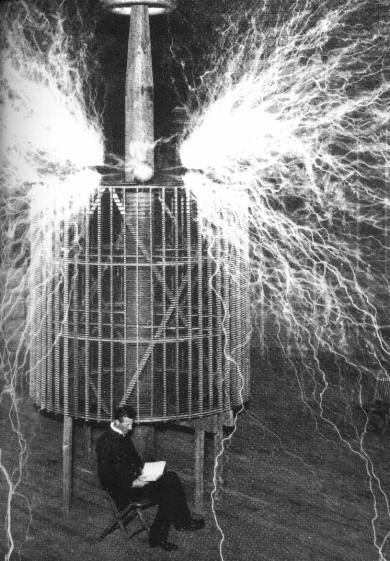
As always is cool. I just wish that there was more lightning strikes to make it even better. And more interesting. 

All together I learned a lot more about motion and the ways things work. And how important equaling out parts or something is because it helps the object to stay balanced.